How Should a Scottsdale or Phoenix Auto Detailing, Car Wash, or Auto Repair Shop Set Up Payment Processing?
If you run an auto detailing shop, car wash, or auto repair business in Scottsdale or anywhere in the Phoenix metro, your payment processing setup probably isn’t something you spend much time thinking about — until it costs you money or a customer walks out frustrated. The truth is, automotive businesses have some specific quirks that generic processors and big-box solutions like Square don’t handle well: large variable invoices, pre-authorization holds for repair estimates, mobile detailers collecting deposits on-site, and fleet accounts that prefer invoiced billing. Getting the right setup in place is simpler than it sounds, and it can make a real difference to your bottom line.
What Makes Auto Shops Different from Other Small Businesses?
Auto repair shops and detailing businesses aren’t like a coffee shop or a boutique. A few things set you apart when it comes to payment processing:
- High average ticket sizes. A full engine repair, transmission job, or premium ceramic coating detail can run $500 to $3,000 or more. That means processing fees hit harder per transaction — and it makes a cash discount or surcharge program worth a serious look.
- Pre-authorization and estimate approvals. Many auto repair shops authorize a card for an estimate amount, then adjust when the final invoice is ready. Your payment system needs to handle auth adjustments cleanly, or you risk disputes and angry customers.
- Fleet and commercial accounts. If you service commercial vehicles for local businesses — delivery companies, contractors, property management firms across Mesa or Chandler — you may be billing net-30 invoices rather than collecting on the spot. That changes the tools you need.
- Mobile detailers and on-site service. A detailer working driveways in DC Ranch or North Scottsdale needs a reliable mobile terminal that doesn’t require a WiFi signal to process a card.
The Right Hardware for Your Shop Type
Not every auto-related business needs the same setup. Here’s a practical breakdown:
Full-Service Auto Repair Shop
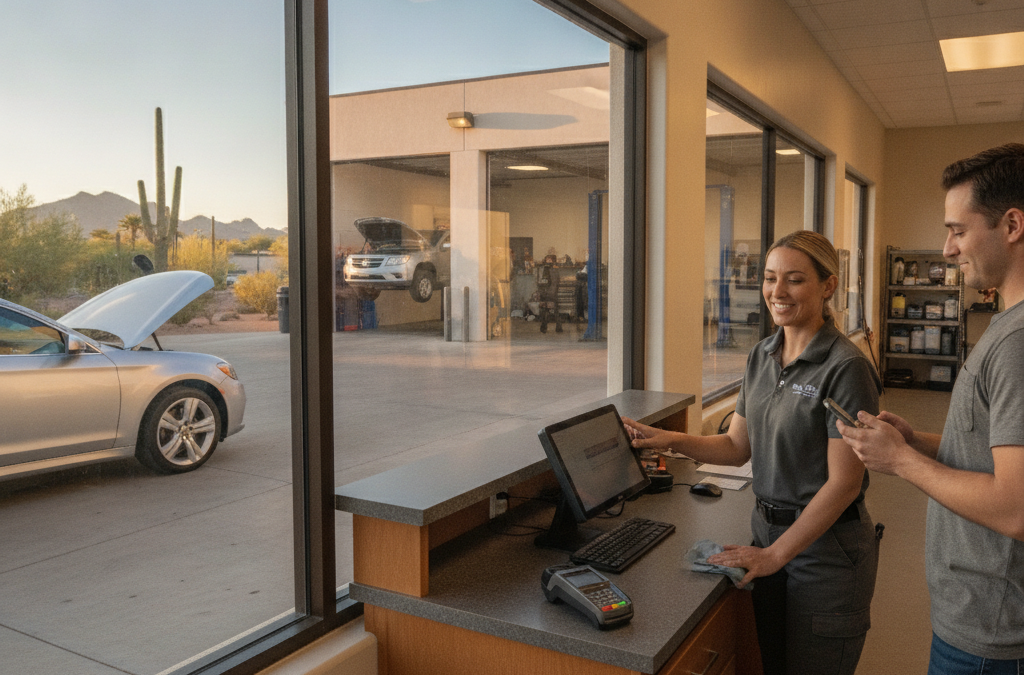
A countertop setup works well here. A Clover Station or Clover Mini gives you a clean point-of-sale with customer-facing display, inventory tracking for parts, and employee management — all useful in a busy shop. You can track open tickets, pull up repair orders, and close out payments quickly when a customer comes to pick up their vehicle. The Clover App Market also integrates with popular shop management software, which many repair shops in the Phoenix metro already use.
If you’re a leaner operation — a two-bay shop in Tempe or a specialty transmission shop in Glendale — a straightforward stand-alone terminal does the job without the monthly software overhead. It handles chip, tap, and swipe, and you’re not paying for features you don’t use.
Mobile Detailers and On-Site Service Providers
If you’re traveling to your customers — working driveways in Gainey Ranch, parking lots at corporate campuses, or car shows around the Valley — you need a terminal that works without a reliable internet connection. Look for a wireless mobile terminal with store-and-forward capability, which means it queues transactions offline and processes them the moment you reconnect. A Clover Flex or Clover Go fits this use case well. Both are compact, battery-powered, and ready for the field. You can also take a deposit when booking and collect the balance on-site without any hassle.
Learn more about what works best for mobile businesses at our wireless and mobile payment terminal page.
Car Washes and Quick-Lube Operations
High-volume, low-dwell-time businesses like car washes or oil change shops need speed above everything else. A tap-to-pay terminal or an integrated kiosk setup gets customers through the line without bottlenecks. If you sell wash packages or memberships, you’ll also want recurring billing built in — that’s where a virtual terminal or a recurring billing gateway earns its keep.
Zero Cost Processing: Worth It for Auto Shops?
With high average ticket sizes, the processing fees on a busy week add up fast. A shop doing $80,000 a month in card volume at a blended rate of 2.5% is paying $2,000 a month — $24,000 a year — just to accept cards. That’s real money.
A zero cost processing program — either a cash discount or a compliant surcharge setup — lets you pass that cost to the customer rather than absorbing it yourself. In practice, most customers in Scottsdale and across Maricopa County have seen these programs at gas stations and retail shops for years and accept them without pushback, especially when it’s disclosed clearly at the point of sale. For a high-ticket auto repair shop, this program can save thousands per year without changing a single thing about how you run your business.
Fleet Accounts and B2B Billing: Don’t Overlook ACH
If you have commercial accounts — maybe you service a fleet of landscaping trucks out of Gilbert or maintain vehicles for a property management company in Chandler — you’re probably either invoicing by email and chasing checks, or eating the processing fee on large card transactions. ACH bank-to-bank transfers are a better fit for this kind of billing. Fees are significantly lower than card processing, and you can automate recurring invoices so your fleet customers pay on schedule without you following up every month.
This is one area where most national processors and even many local competitors don’t give auto shops useful guidance. Square doesn’t offer a real ACH solution for service businesses, and Toast is built entirely for restaurants. A local merchant services provider who works with automotive businesses can set up an ACH workflow that actually fits how you bill your commercial accounts.
What to Watch Out for When Choosing a Processor
A lot of auto shop owners in the Phoenix metro have been burned by long-term contracts with monthly minimums, early termination fees, and rates that quietly increased after the first year. If a processor is asking you to sign a multi-year agreement upfront, that’s a red flag worth noting — especially if you’re still figuring out your monthly volume.
Ask these questions before you sign anything:
- Is there an early termination fee, and how much is it?
- What’s the monthly minimum, and what happens if I have a slow month?
- Are equipment fees included, or will I be leasing hardware at a marked-up rate?
- What does the rate structure look like — flat rate, interchange-plus, or tiered?
- How do you handle chargebacks if a customer disputes a repair charge?
At Good Payments, we don’t lock you into long-term contracts, and we’re upfront about what you’ll pay before you sign anything. If you want someone to actually explain your statement line by line, that’s what we do.
Frequently Asked Questions
Can a mobile auto detailer in Scottsdale accept cards without a WiFi connection?
Yes. A wireless mobile terminal with store-and-forward capability will queue transactions offline and process them once you’re back on a network. Clover Flex and Clover Go both support this, and both work well for mobile detailers across the Valley.
What’s the best POS system for an auto repair shop in the Phoenix metro?
It depends on your volume and how you manage tickets. A Clover Station or Mini is a strong fit for a multi-bay shop that tracks parts inventory and manages open repair orders. A simple countertop terminal works fine for a smaller operation that just needs to collect payment at pickup.
Should my car wash or auto shop use a cash discount program?
If your monthly card volume is significant — say, $20,000 or more — it’s worth a serious look. Cash discount and surcharge programs are legal in Arizona and widely accepted by customers. The savings on a high-volume shop can easily reach four figures per month.
How do I handle pre-authorization holds for repair estimates that change?
You’ll need a payment platform that supports auth adjustments — capturing a different final amount than the original authorization. Not all processors or terminals handle this cleanly. Ask specifically about this before you set up your account, especially if you run a shop that frequently revises estimates mid-job.
I service fleet accounts in Gilbert and Chandler. Is there a better way than chasing checks?
Yes — ACH payments are built for this. You can set up recurring billing tied to your fleet clients’ bank accounts, automate the invoicing cycle, and significantly reduce your per-transaction cost compared to running large commercial card payments. It’s a setup most auto shops haven’t been told about.
Ready to Set Up Payment Processing That Actually Fits Your Shop?
Whether you’re a mobile detailer working North Scottsdale neighborhoods, a multi-bay repair shop near the Loop 101, or a car wash looking to add membership billing, Good Payments Merchant Services will help you find the right setup — no pressure, no long-term contracts, and no surprises on your monthly statement. Zoltan Hardi works directly with automotive business owners across the Phoenix metro to match you with hardware, rates, and programs that make sense for how you actually operate.
Request a free rate analysis and consultation — we’ll review what you’re currently paying and tell you honestly whether we can do better.