


How Should a Scottsdale or Peoria Catering Business Set Up Payment Processing?
If you run a catering company in Scottsdale, Peoria, or anywhere else across the Phoenix metro, your payment needs are genuinely different from most small businesses — and most generic payment setups don’t account for that. You’re collecting deposits weeks or months before an event, sending final invoices after the job is done, and sometimes running a card on-site at a Glendale banquet hall or an outdoor venue in the East Valley. That mix of pre-event billing, remote invoicing, and day-of collections requires a more thoughtful setup than just downloading an app or grabbing a Square reader.
Here’s a practical breakdown of what actually works for catering businesses in the Valley — and what tends to cause headaches down the road.
Why Generic Payment Tools Fall Short for Caterers
Tools like Square or PayPal are fine for low-volume, same-day retail. But catering businesses regularly process large dollar amounts — a corporate lunch for a Chandler tech company or a wedding reception booked through a North Scottsdale event venue might run anywhere from $3,000 to $30,000 or more. At that scale, flat-rate pricing becomes expensive fast. If you’re paying 2.6% plus 10 cents on a $12,000 event deposit, you’ve just handed over more than $300 in fees on a single transaction.
Worse, some processors flag large, irregular transactions as suspicious activity and hold your funds — sometimes for days. If you’ve ever had a catering payment sitting in a pending review right before you need to pay your staff or suppliers, you know exactly how disruptive that is.
National processors also tend to lock caterers into one-size-fits-all systems that weren’t designed for your workflow. You need invoicing, deposit tracking, and on-site payment capability — often all for the same client and the same event.
The Right Payment Stack for a Catering Business
Invoicing and Deposits: Use a Virtual Terminal or ACH
Most caterers collect a deposit upfront — typically 25% to 50% of the event total — and then collect the balance closer to or on the day of the event. The cleanest way to handle this is with a virtual terminal or a hosted payment page tied to your merchant account. You key in the client’s card information over the phone or send them a secure payment link, they pay their deposit, and you get funded without playing phone tag or chasing a check.
For larger events, especially corporate catering accounts billed on net terms, ACH payments are worth considering. Bank-to-bank transfers cost a fraction of card processing rates — often a flat fee rather than a percentage — which matters a lot when you’re invoicing a Mesa school district or a Peoria corporate campus for a recurring lunch program. ACH also tends to reduce chargebacks on large invoices, which is another reason caterers with B2B clients find it valuable.
Day-of Payments: Go Mobile and Reliable
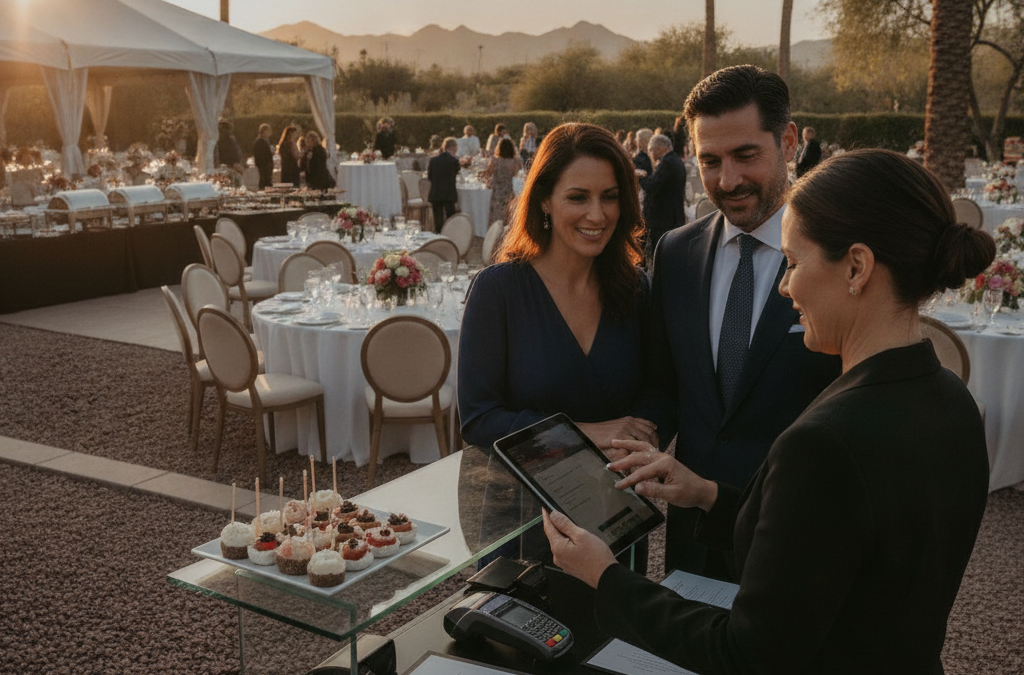
When you’re working an event, you need a terminal that goes where you go — not one that requires a stable Wi-Fi connection at a venue that may or may not have decent signal. A 4G/LTE mobile terminal or a Clover Flex lets you take final payments at the end of an event, collect tips for your staff, and move on without depending on the venue’s infrastructure.
Look for a device that supports store-and-forward processing — meaning it can capture a transaction offline and submit it once a connection is restored. That’s not a feature you’ll think about until you’re standing in a Cave Creek backyard with no signal and a client trying to pay their balance. Wireless and mobile payment terminals built for this kind of use are a much better fit than a phone-based app that drops out at inconvenient moments.
Clover for Caterers Who Want More Structure
If your catering operation has grown to include a small retail component — like a storefront selling prepared meals, a pickup counter, or packaged goods — a Clover POS system can bring your in-person sales and back-office reporting together in one place. The Clover Flex works well for mobile collection at events, while the Clover Mini or Station makes sense if you have a physical location in Scottsdale or Peoria where clients come in to sample menus, sign contracts, or pick up orders.
Clover’s App Market also integrates with scheduling and invoicing tools, which a lot of caterers find useful as they scale. It’s not the right fit for every catering operation, but for businesses with both a physical presence and event-based revenue, it keeps things from getting scattered across three different systems.
Handling the Snowbird Season Surge — and the Summer Slowdown
If you’re catering in the Scottsdale or Maricopa County market, you already know how dramatically volume swings between October and April versus the summer months. Snowbird season means corporate events, charity galas, golf tournament catering, and a busy wedding calendar. Summer is a different story for most Valley caterers.
This seasonal pattern is exactly why flexible payment terms matter. You don’t want to be locked into a long-term processor contract with a high monthly minimum during months when your event calendar is thin. A month-to-month agreement with no early termination fee gives you the flexibility to scale up and down without penalty — and that’s something the big national processors often don’t offer.
Zero Cost Processing: A Real Option for High-Volume Caterers
If your catering business processes significant card volume each month, a cash discount or surcharge program can meaningfully reduce what you pay in fees. The basic idea is straightforward: customers who pay by card cover the cost of card processing, while customers who pay by cash or check get a small discount. When done correctly and disclosed properly, this is legal in Arizona and increasingly common across the Valley.
For caterers, the math can add up quickly. If you’re processing $30,000 or $40,000 a month in card payments, even a modest reduction in your effective rate makes a noticeable difference in take-home margin. Zero cost processing programs aren’t right for every business or every client relationship, but they’re worth understanding before you assume your current fees are just the cost of doing business.
What to Look for in a Local Payments Partner
A good merchant services provider for a catering business should understand your billing cycle, not just your transaction volume. That means they should be comfortable discussing deposit workflows, partial payments, and invoicing — not just terminal hardware. They should also be reachable when something goes wrong the morning of a big event, not routing you to an overseas call center.
Ask any provider you’re considering:
- Is there a long-term contract, and what’s the early termination fee if any?
- How quickly are funds deposited — next business day, or longer?
- Can I send payment links or process key-in transactions remotely for deposits?
- What happens if a large transaction is flagged — who do I call?
- Do you support ACH for recurring or B2B invoicing?
If you’re getting vague answers, that’s useful information too.
Frequently Asked Questions
Can I collect a deposit by card before the event date?
Yes — with a virtual terminal or payment link, you can securely collect a deposit from a client’s card over the phone or by email without needing them present. This is standard practice for catering businesses and works well for advance bookings weeks or months out.
Is ACH a good option for catering invoices?
For larger corporate or recurring accounts, ACH is often a smarter choice than card processing. The fees are significantly lower on big transactions, and there’s less risk of chargebacks. If you do regular catering for businesses in Peoria, Mesa, or Chandler, ACH billing is worth setting up.
What if I cater events in venues with poor Wi-Fi or no signal?
You need a mobile terminal with store-and-forward capability or a 4G/LTE connection — not just Wi-Fi. A Clover Flex or a standalone wireless terminal with cellular backup will handle this without dropping transactions. Don’t rely on a phone-based app in a remote venue.
Are there processing fee limits or holds on large catering transactions?
Some processors — especially flat-rate consumer tools like Square — may flag or hold large transactions that fall outside your typical volume. Working with a processor who understands your business and sets up your account correctly from the start reduces that risk significantly. Next-day funding is also something worth confirming upfront.
Can I use a cash discount program for catering clients?
Yes, and many caterers in the Phoenix metro are doing exactly that. You’d need to disclose the program properly to clients — typically in your proposal or contract — and make sure the program is set up compliantly. It works best when clients have some flexibility in how they pay, rather than corporate accounts locked into card payment for accounting reasons.
Let’s Get Your Catering Business Set Up the Right Way
Good Payments Merchant Services works with catering businesses, event companies, and mobile food operators across Scottsdale, Peoria, and the broader Phoenix metro. Whether you need a cleaner way to collect deposits, a mobile terminal that works in the field, or a full review of what your current processor is actually costing you, we’re happy to walk through it with you — no pressure, no sales pitch, just a straightforward conversation.
Reach out for a free rate analysis and consultation. We’ll look at your current setup, identify where you’re overpaying, and recommend what actually makes sense for how your business runs.