
How Should a Scottsdale or Chandler Business Set Up Payment Processing for B2B Clients and Invoicing?
If your Scottsdale or Chandler business sells to other businesses — think wholesale distributors, commercial contractors, staffing firms, professional service providers, or medical and legal offices — a standard retail card reader is probably not the right tool for the job. B2B payment processing has its own set of rules, and setting it up correctly can mean the difference between paying full interchange rates on every transaction or qualifying for significantly lower ones. It can also mean the difference between chasing down payments for 60 days or getting paid on time without the back-and-forth.
Here’s what B2B business owners across the Phoenix metro — from North Scottsdale to the Chandler tech corridor — actually need to know about setting up payments for invoicing, corporate cards, and recurring business client billing.
Why B2B Payment Processing Is Different From Retail
When you run a consumer-facing business, most of your customers pay with personal debit or credit cards at the point of sale. The transaction is face-to-face, it’s immediate, and the card-present rate is generally the lowest interchange tier you’ll hit.
B2B is almost the opposite. Your client is likely paying with a corporate purchasing card or a business credit card — sometimes called a commercial card — after you’ve sent an invoice. The transaction happens days or weeks after the work is done. The card is not physically present. And commercial cards, by design, carry higher interchange rates than consumer cards.
What most processors — and most of the national brands your clients are already comparing you against — don’t bother to explain is that there are ways to bring those rates back down. Specifically, through what the card networks call Level 2 and Level 3 data.
What Is Level 2 and Level 3 Processing — And Why Does It Matter in Scottsdale?
Level 1 is the basic data every card transaction captures: cardholder name, billing zip, and transaction amount. That’s the default for most card-present retail purchases.
Level 2 adds fields like the customer’s purchase order number, sales tax amount, and merchant tax ID. Level 3 goes even further — it includes line-item detail, commodity codes, shipping information, and unit cost breakdowns.
When you pass Level 2 or Level 3 data with a B2B transaction, Visa and Mastercard reward you with lower interchange rates on commercial cards. Depending on your average ticket size, this can save you anywhere from 0.5% to over 1% per transaction. For a Chandler-based wholesale distributor processing $200,000 a month in corporate card payments, that’s real money — not a rounding error.
Most generic setups don’t capture this data automatically. You need a processor and payment platform that supports Level 2/3 processing natively, and someone to actually set it up correctly on your account.
The Right Tools for B2B Invoicing and Payment Collection
If your business sends invoices and collects payment remotely — whether you’re a Gilbert-based IT firm billing monthly retainers, a Mesa commercial cleaning company invoicing property managers, or a Scottsdale law firm collecting retainers — here’s what your payment stack should actually include.
Virtual Terminal for Keyed-In Payments
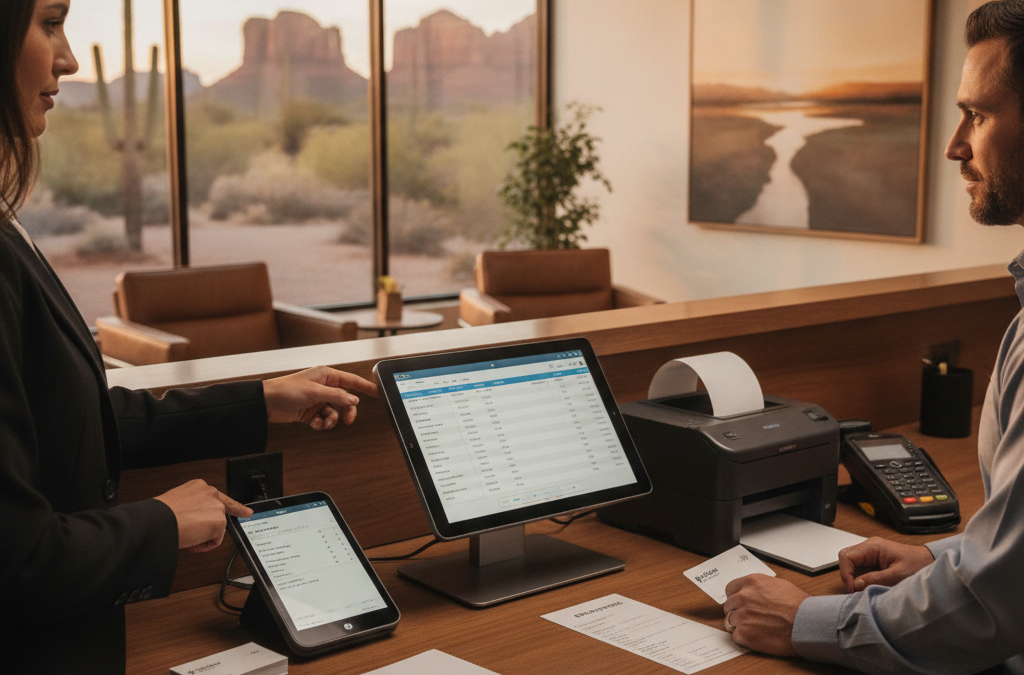
A virtual terminal lets you accept card payments by typing in the card number manually — no physical card reader required. Your client reads you the card number over the phone, or you enter it when they email you the information. It’s simple, secure, and works from any browser.
The key is making sure your virtual terminal supports Level 2 data capture so you’re not automatically paying top-tier interchange on every corporate card transaction. Good Payments offers virtual terminal access that handles this correctly, without requiring you to buy into a complicated software suite you don’t need.
ACH Payments for Recurring B2B Billing
For clients you invoice regularly — monthly service contracts, ongoing retainers, subscription-based professional services — ACH bank-to-bank transfers are often a smarter choice than running a card every month. ACH fees are typically flat-rate and significantly lower than card interchange. For a $5,000 monthly invoice, that difference is noticeable.
ACH is also simpler for your clients. Instead of having to update a card number every time it expires or gets reissued, they give you their routing and account number once and you pull funds on your schedule. For stable, long-term business relationships, it removes friction on both sides.
The tradeoff is that ACH takes a bit longer to settle than cards — typically one to two business days — and disputes work differently than card chargebacks. But for the right billing relationship, it’s a cleaner, cheaper workflow.
Cloud-Based Reporting and Invoice Tracking
When you’re billing multiple business clients across Maricopa County — or managing different billing cycles for different accounts — you need a payment platform that gives you a clear view of who’s paid, who hasn’t, and what your receivables look like in real time.
The CardPointe Suite handles this well for B2B-oriented businesses. It includes cloud-based reporting, invoicing tools, and the ability to manage multiple payment methods under one dashboard. If you’re running more than a handful of business client accounts, having that visibility matters — especially when a client says they paid but it hasn’t hit your account yet.
What Most Competitors Don’t Tell You About B2B Processing
This is where most processors — including the major national brands and several local agencies — leave you on your own. After reviewing how competitors in the Phoenix market talk about payment processing, almost none of them address B2B invoicing workflows, Level 2/3 data, or the specific needs of businesses that sell to other businesses rather than end consumers.
You’re typically handed the same setup as a retail shop: a card terminal, a flat rate, and a handshake. That’s fine if you’re running a boutique in Old Town Scottsdale. It’s not fine if you’re processing $50,000 a month in corporate card transactions and paying consumer-tier interchange rates because nobody told you there was a better option.
A few things to ask any processor before signing up for B2B payment services:
- Does your platform support Level 2 and Level 3 data capture and pass it through automatically?
- Can I send invoices and accept keyed-in card payments through a virtual terminal?
- Do you offer ACH as an alternative to card payments for recurring billing?
- How do you handle disputes on commercial card transactions versus consumer card transactions?
- Are there long-term contracts, or can I adjust my setup as my billing volume changes?
If a processor can’t answer the first question clearly, keep looking.
B2B Industries in the Phoenix Metro That Benefit Most From This Setup
Across Scottsdale, Chandler, Tempe, and the broader East Valley, the businesses that gain the most from a properly configured B2B payment setup tend to fall into a few categories:
- Commercial contractors and subcontractors billing general contractors or property managers
- IT and managed service providers billing recurring monthly retainers on corporate cards
- Staffing and HR firms invoicing client businesses for placement fees or ongoing services
- Wholesale distributors taking purchasing card payments from retail buyers
- Professional service firms — accounting, legal, consulting — billing business clients
- Commercial cleaning, landscaping, and facilities companies managing monthly billing across multiple accounts
If your business is in any of these categories and you’re currently running everything through Square or a basic payment link, you’re almost certainly overpaying and underequipped.
Frequently Asked Questions: B2B Payments and Invoicing in Scottsdale and Chandler
What’s the difference between a commercial card and a regular business credit card?
Most business credit cards issued to small business owners are actually treated like consumer cards for interchange purposes. A true commercial or purchasing card — typically issued to mid-size and enterprise companies for procurement — carries higher default interchange but qualifies for Level 2 and Level 3 rate reductions when the right data is passed. If your clients are large companies, their cards are likely commercial cards.
Can I send an invoice and let my client pay online with a card or ACH?
Yes. A well-configured virtual terminal or invoicing platform lets you send a payment link your client can use to pay by card or ACH directly. This removes the back-and-forth of collecting card numbers over the phone and gives your client a clean, professional payment experience.
Is ACH right for my B2B billing, or should I stick with cards?
It depends on your average invoice size and the stability of the client relationship. For recurring invoices over $1,000 to clients you’ve billed for months or years, ACH usually makes more sense — the fees are lower and the process is simpler once it’s set up. For one-time or variable invoices where speed of payment matters, a card payment link may be more practical.
Do I need a separate merchant account for B2B versus retail transactions?
Not necessarily. A properly configured merchant account can handle both. What matters is that your account is set up to support the transaction types you’re running — including keyed-in virtual terminal payments and ACH — and that your processor knows your business model so your account doesn’t get flagged for unusual activity.
Are there contracts involved in setting up B2B payment processing?
That depends on who you work with. Good Payments does not lock you into long-term contracts, so if your billing volume changes or your business model shifts, you’re not stuck. That’s worth asking about before you sign anything with any provider.
Work With a Local Payments Specialist Who Understands B2B
B2B payment processing isn’t complicated once it’s set up correctly — but getting it right requires working with someone who actually understands how commercial cards, Level 2/3 data, and invoicing workflows fit together. Most national processors aren’t going to walk you through this. And most of the big-name POS companies are built for retail, not business-to-business billing.
At Good Payments Merchant Services, we work with B2B businesses across Scottsdale, Chandler, Phoenix, and the surrounding Valley to build payment setups that match how they actually invoice and collect. No hidden fees, no long-term contracts, and someone local who actually picks up the phone when something needs adjusting.
If you’re ready to stop overpaying on commercial card transactions or finally get your invoicing workflow sorted out, reach out for a free rate analysis and consultation. We’ll take a look at what you’re currently paying and show you exactly where a better setup makes sense.