
How Should a Scottsdale or Tempe E-Commerce Business Set Up ACH and Card Processing for High-Volume Wholesale Orders?
If your Scottsdale or Tempe e-commerce business is processing wholesale orders — whether you’re selling to other retailers, running a B2B store, or fulfilling bulk orders regularly — then your payment setup probably needs more than a basic card processor. The short answer is this: combining ACH bank transfers with a proper card processing account gives you lower fees on large transactions, more payment flexibility for your buyers, and fewer chargebacks than a card-only setup. Here’s how to think through it practically, and what to actually set up.
Why a Single Payment Method Usually Isn’t Enough for Wholesale E-Commerce
Most payment processors — Square included — are built with retail consumers in mind. You get a flat rate, a nice dashboard, and simple card acceptance. That works great if your average transaction is $40. It stops making sense fast when your average wholesale order is $800, $2,000, or more.
Here’s the math problem: if you’re processing a $2,500 wholesale order and your card processing rate is 2.7%, you’re paying $67.50 in processing fees on a single transaction. Do that 50 times a month and you’ve handed your processor over $3,300. If your margins are already tight on wholesale volume — and they usually are — that’s real money walking out the door.
For wholesale and B2B orders, ACH (bank-to-bank transfers) can bring that fee down dramatically. ACH transactions typically run at a flat fee or a very low percentage, often well under 1% on larger orders, with a per-transaction cap. The tradeoff is a 1–3 business day settlement window instead of next-day card funding. For most wholesale buyers paying invoices, that delay is completely acceptable.
What a Good Payment Setup Looks Like for Wholesale E-Commerce in Scottsdale
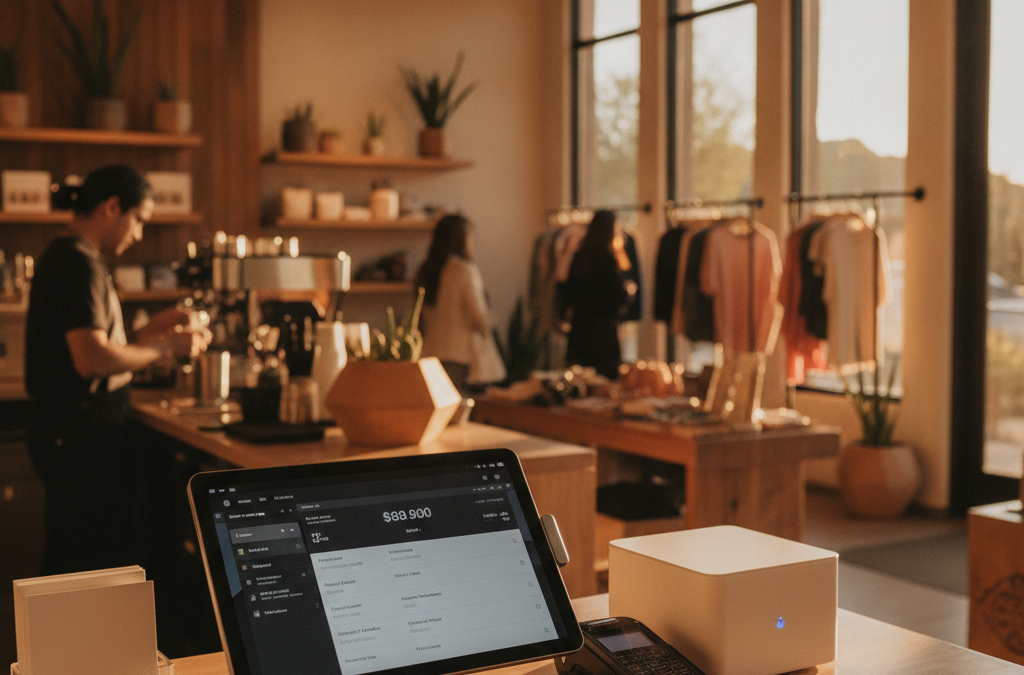
The right setup for a high-volume e-commerce or wholesale business in Scottsdale or Tempe usually combines three things: a proper merchant account with interchange-plus pricing, ACH capability for larger orders, and a virtual terminal or e-commerce gateway so buyers can pay through your website or via a sent invoice link.
Here’s what each layer does:
- Merchant account with interchange-plus pricing: Unlike flat-rate processors, interchange-plus passes through the actual card network cost and adds a small markup. On high-volume or large-ticket transactions, this almost always beats a flat rate — sometimes significantly. You’ll want a processor who can show you the math side by side on your actual order history.
- ACH processing: Give your wholesale buyers the option to pay by bank transfer. This is especially useful for repeat buyers with established accounts. ACH reduces chargeback risk, lowers your processing cost substantially on large tickets, and is what many B2B buyers prefer anyway because it integrates cleanly with their own accounts payable process.
- Virtual terminal or hosted payment page: Your customers need a way to actually pay — whether that’s a payment link you email, a checkout page on your site, or a recurring invoice. A good virtual terminal handles all of this without requiring your buyer to create an account or jump through hoops.
The e-commerce and virtual terminal options we work with at Good Payments support all of the above — card payments, ACH, invoicing, and recurring billing — in one account rather than duct-taping multiple platforms together.
The Gap Most Processors Don’t Fill: B2B Buyer Experience
Here’s something that almost none of the national processors or their generic content ever addresses for e-commerce wholesale businesses: your buyer’s experience matters as much as your own setup. A retailer in Mesa or a distributor in Chandler who’s placing a $3,000 order with you doesn’t want to key in a credit card number on a sketchy-looking checkout page. They want a clean invoice, a professional payment link, maybe a net-30 option they can pay by ACH when the invoice is due.
If your current setup can’t send a branded invoice with a clickable payment link that accepts both card and ACH, you’re creating friction that costs you repeat business. This is a gap that Square doesn’t adequately fill for B2B sellers, and it’s one of the main reasons wholesale e-commerce merchants in the Phoenix metro end up calling us after outgrowing their first processor.
Should You Add a Zero Cost Processing Program to Your Wholesale Setup?
If most of your orders are paid by card rather than ACH, a cash discount or surcharge program is worth a conversation. With a properly disclosed surcharge program, your buyers who pay by card cover the card processing fee — which effectively brings your processing cost to zero on those transactions. For wholesale businesses with small margins, this can make a real difference on high-ticket orders.
The key word there is “properly disclosed.” There are compliance rules that vary by card network and state, and you need to implement this correctly — with the right signage, receipt language, and surcharge structure — to stay compliant. It’s not complicated when set up right, but it’s also not something you want to wing on your own.
What About CardPointe for Multi-Channel Wholesale Sellers?
If you’re running orders through multiple channels — a wholesale website, a phone sales team that keys in card numbers, and maybe a trade show or in-person pickup — the CardPointe platform handles all of that from one dashboard. Cloud-based reporting, tokenized card storage so repeat buyers don’t have to re-enter payment info, and a single place to see all transactions across channels. For a growing wholesale operation in Scottsdale, Tempe, or anywhere across Maricopa County, that kind of centralized visibility is genuinely useful. You can learn more about how CardPointe works on our CardPointe suite page.
What to Ask a Processor Before You Sign Anything
Before you commit to any payment processor for your wholesale e-commerce business, get clear answers to these questions:
- Do you support ACH payments, and what are the per-transaction fees?
- Is pricing interchange-plus, or am I on a flat rate?
- Can I send invoices with payment links that accept both card and ACH?
- Is there a long-term contract or early termination fee?
- How do you handle chargebacks on high-ticket B2B orders?
- What does settlement timing look like for ACH vs. card transactions?
If a processor can’t answer all of these directly, that’s your answer. At Good Payments, we work through this with you before you sign anything — no long-term contracts, no surprise fees buried in the fine print.
Frequently Asked Questions
Can I offer both ACH and card payment options on the same checkout or invoice?
Yes — a properly configured virtual terminal or hosted payment page can present both options to your buyer. They choose how to pay, and the transaction routes correctly regardless. This is standard functionality with the platforms we set up for wholesale e-commerce clients.
Is ACH processing right for every wholesale transaction?
Not necessarily. ACH works best for large, planned purchases where a 1–3 business day settlement window is acceptable. For smaller or time-sensitive orders, card processing is usually still the right call. The goal is having both options available so you can let the order size and customer type guide the decision.
How do I handle a chargeback on a large wholesale order that was paid by card?
This is one of the biggest risks for wholesale e-commerce sellers. Having solid documentation — signed order confirmations, delivery records, email communication — is your best defense. On the processor side, tokenization and fraud tools help prevent unauthorized transactions from making it through in the first place. If you’re getting hit with chargebacks regularly, that’s a conversation worth having with us — there are structural fixes that most generic processors never suggest.
Do Phoenix-area wholesale businesses qualify for lower card processing rates than retail businesses?
Sometimes. B2B card transactions often qualify for lower interchange categories (called “business card” or “corporate card” rates) when the right data is passed with the transaction. This is called Level 2 or Level 3 processing, and it can reduce interchange costs on B2B card payments. Not every processor enables this automatically — it’s worth asking about specifically.
Is there a contract involved in setting up ACH payment processing?
At Good Payments, there are no long-term contracts. You shouldn’t have to be locked in to find out whether a payment setup actually works for your business. Month-to-month terms mean if something isn’t working, we fix it — and if you ever want to leave, you can without paying a penalty.
Ready to Set Up the Right Payment System for Your Wholesale Business?
Whether you’re running a wholesale e-commerce store in Scottsdale, a B2B operation in Tempe, or a growing distributor serving buyers across Gilbert, Mesa, and the rest of the Valley — the right payment setup should be saving you money on processing costs, not just checking a box so you can accept cards. If you’re ready to look at what you’re currently paying and figure out where a combined ACH and card setup could do more for you, reach out directly. There’s no sales pitch and no obligation — just a straightforward look at your current setup and what a better one might look like.
Request a free rate analysis from Good Payments Merchant Services →